

A car can become harder to control long before it stops moving. The steering may feel loose, the body may lean farther in corners, or the vehicle may pull when you brake. Because these changes often develop gradually, drivers may adjust without realizing how much stability has been lost.
Control depends on the tires, steering, suspension, brakes, and wheel alignment working together. A problem in one area can place extra strain on the others, especially during emergency braking, sudden lane changes, wet weather, or highway driving.
1. Worn Tires Or Incorrect Tire Pressure
Tires provide the only contact between the vehicle and the road. Low pressure allows excessive sidewall movement and can make steering feel delayed or unstable. Overinflation reduces the size of the contact patch and can make the vehicle react harshly to bumps. Uneven pressure from side to side may also cause pulling.
Tread condition is equally important. Tires with worn shoulders, cupping, cracks, bulges, or internal belt damage may lose traction or create vibration. A tire can still have visible tread while being unsafe because of age or structural damage. Pressure and condition should be checked regularly, including areas of the tread that are difficult to see.
2. Loose Steering Components
Tie rods, ball joints, steering rack mounts, and related joints connect steering wheel movement to the front wheels. As these parts wear, the wheels may not respond immediately or may shift when the vehicle encounters bumps, braking forces, and road grooves.
The driver may notice wandering, frequent steering corrections, knocking sounds, or a steering wheel that feels less precise. Severe looseness can affect alignment and tire wear, but the greater concern is unpredictable wheel movement. An inspection should be performed before alignment adjustments because a loose joint cannot hold the correct position.
3. Worn Shocks, Struts, Or Suspension Bushings
Shocks and struts control how quickly the suspension compresses and rebounds. When they weaken, the tires may bounce after bumps instead of staying firmly against the road. The vehicle can feel floaty on the highway, lean more in turns, or take longer to settle after a dip.
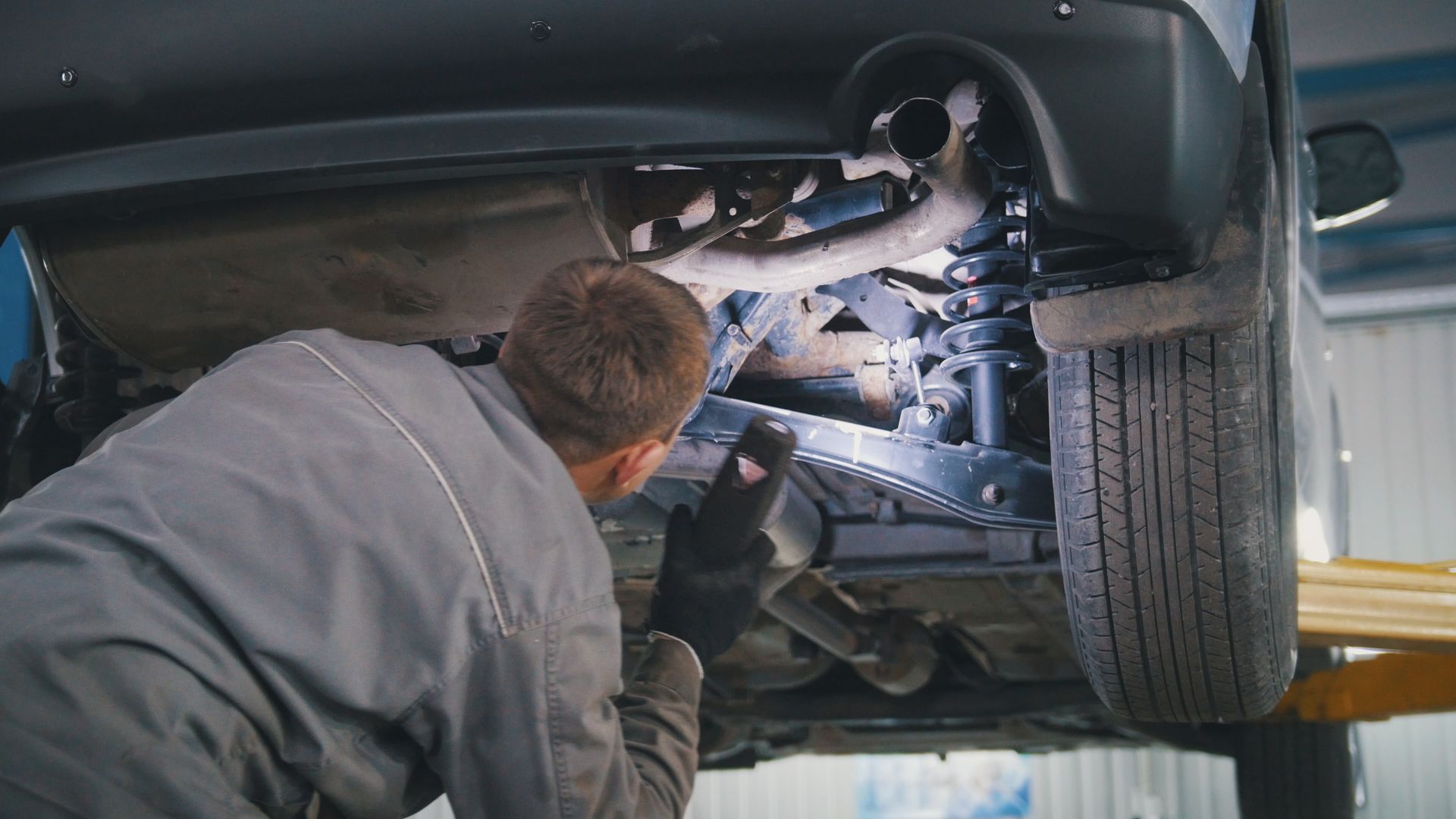
Control arm bushings, sway bar links, springs, and mounts also influence stability. Cracked or separated rubber can allow a wheel to move forward, backward, or sideways under load. Regular maintenance gives technicians opportunities to spot leaks, broken mounts, and developing looseness before the driver begins struggling to keep the vehicle settled.
4. Brake Problems That Pull The Vehicle Sideways
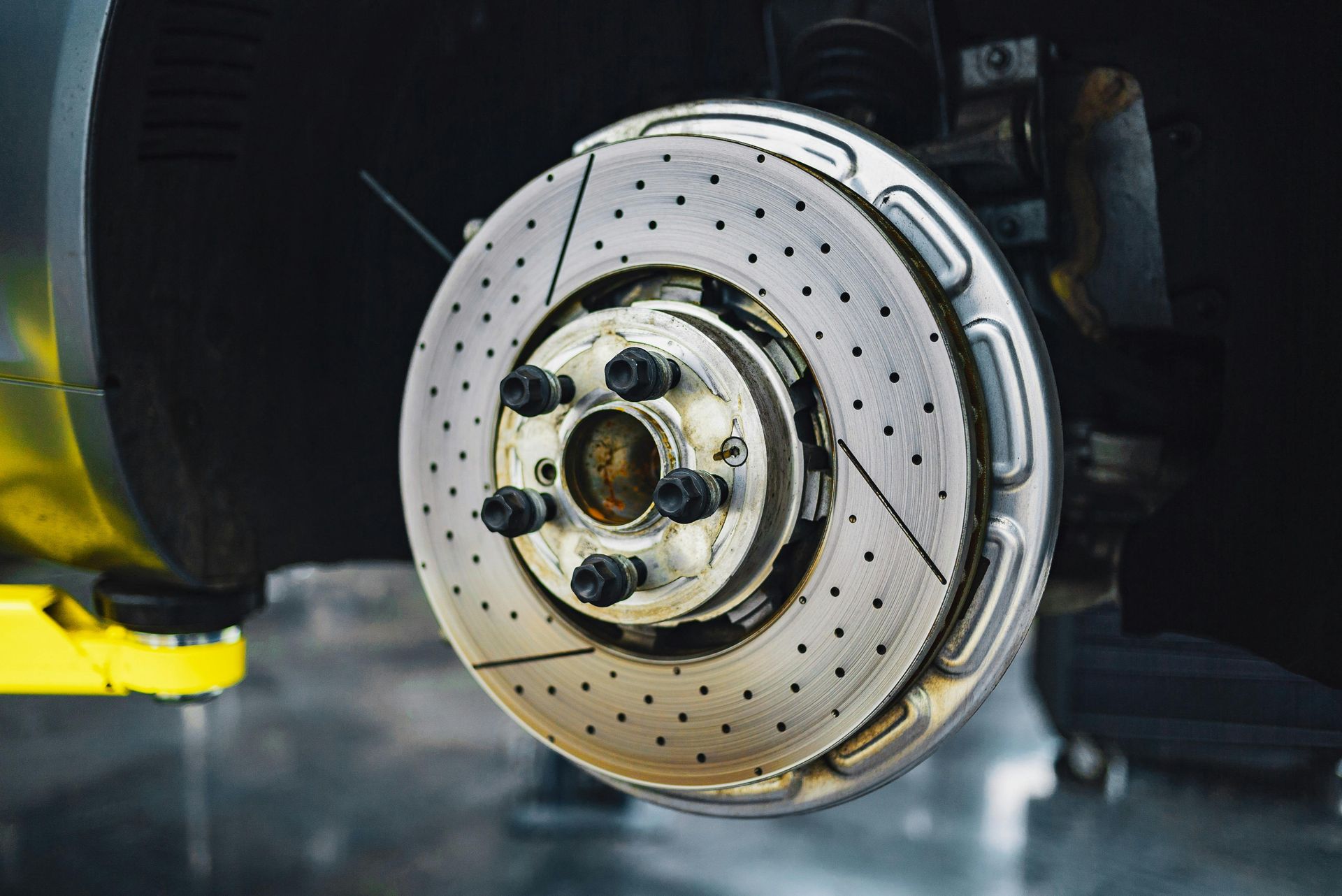
The brakes should apply evenly at all four wheels. A sticking caliper, contaminated pad, restricted hose, or uneven rotor condition can cause one side to brake harder than the other. During a normal stop, the pull may be mild. During a panic stop, it can become much stronger.
Brake drag can also overheat one wheel and reduce acceleration. You may notice a burning smell, heavy brake dust, or one wheel that appears discolored from heat. A soft pedal, grinding noise, severe pulling, or smoke near a wheel requires prompt attention because the braking system may not respond predictably.
5. Wheel Alignment And Bearing Problems
Wheel alignment controls the direction and angle of the tires. When toe, camber, or caster moves outside specification, the car may pull, wander, or require constant correction. Potholes, curb impacts, worn suspension parts, and changes in ride height can all affect alignment.
Wheel bearings can create similar control concerns as they wear. Early symptoms may include a humming sound that rises with speed or changes during turns. As looseness develops, the wheel may shift and affect steering, braking, and tire wear. Alignment alone will not correct movement from a damaged bearing or worn joint.
Warning Signs That Should Not Be Ignored
Changes in control are especially concerning when they appear suddenly or become worse at higher speeds. Pay attention to how the vehicle reacts during braking, turning, and travel over uneven pavement.
- The steering wheel requires constant correction.
- The vehicle pulls sharply while braking.
- The body continues bouncing after a bump.
- A wheel produces humming, grinding, or knocking sounds.
- The steering feels loose or delayed.
- The tires show bulges, exposed cords, or severe uneven wear.
- The vehicle shakes strongly at highway speed.
- One wheel smells hot or produces smoke.
Avoid highway driving if the vehicle feels unstable, the steering has obvious looseness, or a tire shows structural damage. A tow may be safer when the car cannot stay straight, or the brakes pull severely.
Why Several Systems Need To Be Checked Together
A control problem may begin in one area and create symptoms somewhere else. Weak struts can cause tire cupping, a sticking brake can make the vehicle pull, and a loose tie rod can prevent alignment from staying correct. Replacing one visibly worn part without checking related systems may leave the original handling concern unresolved.
A proper evaluation may include tire measurements, wheel balance, suspension movement, steering joints, brake operation, bearing condition, and alignment angles. A road test helps show whether the problem appears during acceleration, braking, cornering, or steady highway travel.
Get Vehicle Safety And Handling Repair In Greenville, SC, With Roper Mountain Auto Care
If your car pulls, wanders, bounces, shakes, or feels harder to control, Roper Mountain Auto Care in Greenville, SC, can check the tires, steering, suspension, brakes, bearings, and alignment.